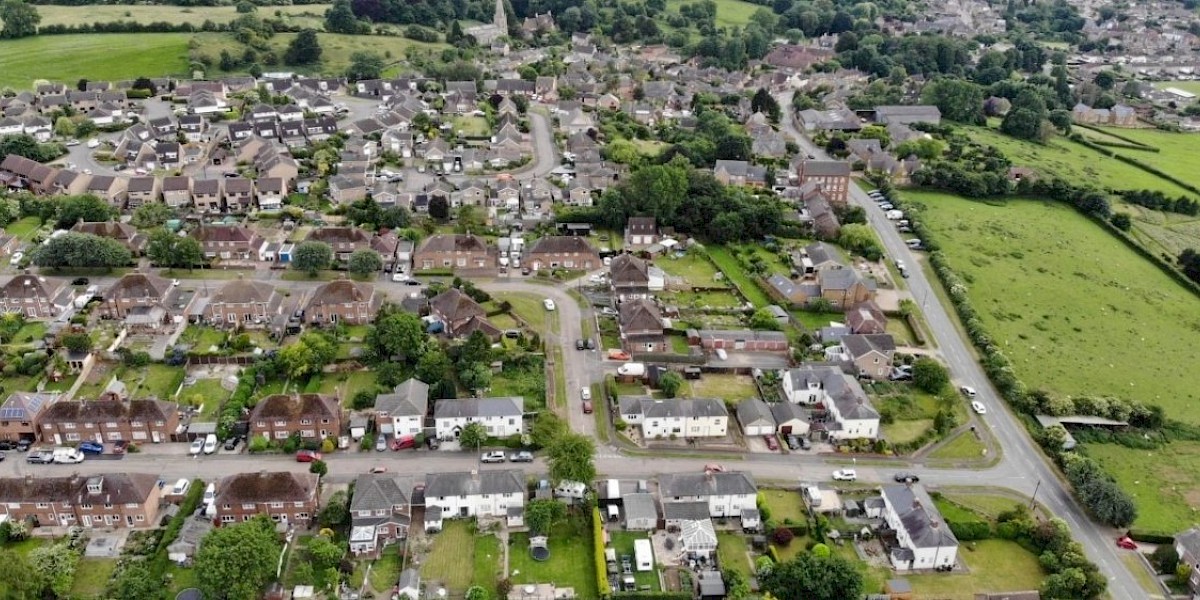
On the shoulder of a gentle Northamptonshire hill, Cottingham unfurls like a picture-book village: a jigsaw of honey-toned ironstone, thatched gables and twisting lanes that tip towards the wide, green bowl of the Welland Valley. Wander in at golden hour and the view feels almost theatrical - fields and hedgerows stretching to the horizon while, just beyond the ridge, Rockingham Castle keeps quiet watch over five shires.
The settlement is ancient. Cottingham appears in the Domesday Book and its name traces back to “Cotta’s people,” an Anglo-Saxon clan whose homestead once stood here. Today its population hovers around 900, but the village still feels more like a small community than a commuter satellite, with greetings exchanged across garden walls and parish-noticeboards busy with handwritten fliers.
Rising above the rooftops, the 13th-century tower of St Mary Magdalene punctuates the skyline, its later 15th-century stonework glowing warm against the valley light. Step inside and you’ll find medieval arches, mellow pews and a peal of six bells that still summon worshippers, and walkers, on Sunday mornings.
Refuelling in Cottingham is a pleasure. The Royal George claims to be one of England’s oldest inns, its 13th-century core now home to roaring fires in winter, local ales on hand-pump and five smart B&B rooms overlooking the valley. A few doors away, volunteers keep the Community Store and Café humming with fresh bread, barista coffee and chatter; grab a picnic and a village-made pork pie before heading out. The once-bustling Spread Eagle opposite the church remains closed and under review for redevelopment, a reminder that rural pubs live (or die) by local support, but its stone façade still adds character to the High Street.
For many visitors the great outdoors is the main draw. Cottingham sits on the 88-mile Jurassic Way, and the Braybrooke-to-Cottingham section, 7.9 undulating miles through ridge-top pasture, is a perfect taster. East Carlton Country Park, a mile away, offers gentler loops beneath veteran oaks and an interactive dinosaur trail for younger explorers, while seasoned hikers strike north for the ironstone spine of the Welland Viaduct, Britain’s longest masonry bridge, whose 82 arches march across the valley floor like a Roman aqueduct reborn.
Regular buses link the village with the market town of Market Harborough and the resurgent steel town of Corby, but the best way to arrive is still on foot, cresting the last stile as Cottingham’s spire appears amid orchard blossom and chimney smoke. Whether you’re chasing long-distance miles, tracing history’s quiet footprints or simply sipping a pint as the sun dips behind the viaduct, this little hillside hamlet offers a slice of rural England that feels both timeless and warmly lived-in.