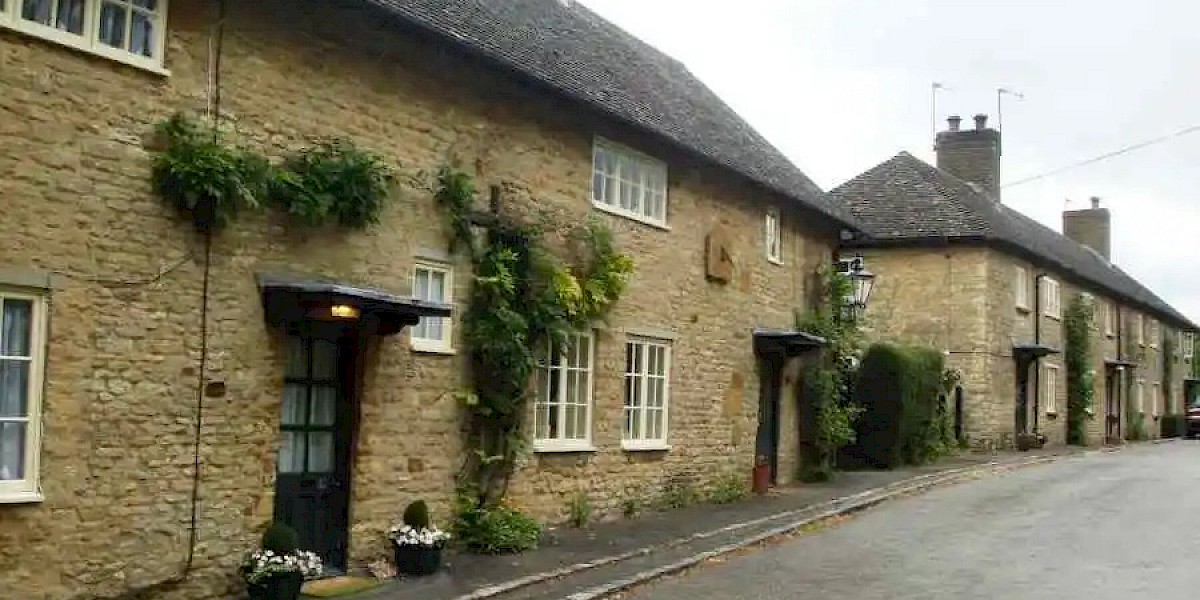
Slip off the M1 at Junction 15 and, almost before your sat-nav can recalculate, the modern world seems to melt away. A narrow, no-through lane winds beneath ancient oaks towards Courteenhall’s mellow stone cottages, where the only soundtrack is birdsong and the occasional clip-clop of a horse on its way to open pasture. The village’s location makes it remarkably easy to reach—yet the moment you arrive, it feels improbably secluded, a hidden hamlet wrapped in countryside.
At the heart of this tiny settlement stands St Peter and St Paul, a church whose earliest masonry dates to the 12th century. Its sturdy medieval tower rises above the rooftops, guarding memorials to generations of local families and offering a tangible link to nearly nine hundred years of worship. Step inside and you’ll find carved stone arches glowing gold in the afternoon light; outside, weather-worn gravestones lean into lush yew hedges, lending the churchyard an almost story-book tranquillity.
Beyond the cottages, the land opens into the 370-acre park laid out in 1791 by Humphry Repton for Sir William Wake. At its centre sits Courteenhall House, a graceful late-Georgian mansion by architect Samuel Saxon, still lived in by the Wake family today. Sheep graze the rolling lawns, neatly checked by a classic ha-ha, while an arboretum and formal gardens hint at the horticultural passions of past owners. Although the Hall itself remains private, visitors can glimpse its honey-coloured façade from public footpaths that thread the estate.
Those footpaths come alive during Courteenhall’s much-loved biennial fête each June in even-numbered years—a quintessential English country gathering where brass bands play, stalls spill with homemade jams, and the Hall’s grounds (including the arboretum) open for charity. On other occasions the estate hosts pop-up open-farm days, tractor-and-trailer tours and woodland walks, all celebrating its commitment to sustainable agriculture. Private weddings, film shoots and corporate retreats also find a home here, ensuring that while the village remains small, its horizons are surprisingly wide.
Even when no event is scheduled, Courteenhall rewards unhurried exploration. Public rights-of-way weave past hedgerows thick with blackberries in late summer, through arable fields alive with skylarks, and into pockets of ancient woodland where bluebells paint the ground each spring. Nearby, the larger village of Roade provides pubs and provisions, yet Courteenhall itself stays blissfully free of modern distractions—no shop, no street-lights, just wide Northamptonshire skies and the gentle rhythm of rural life.
For travellers, that blend of accessibility and solitude is Courteenhall’s quiet magic: an invitation to press pause, wander under veteran oaks, and feel, if only for an afternoon, part of a landscape shaped as much by time and tradition as by the people who still lovingly tend it today.