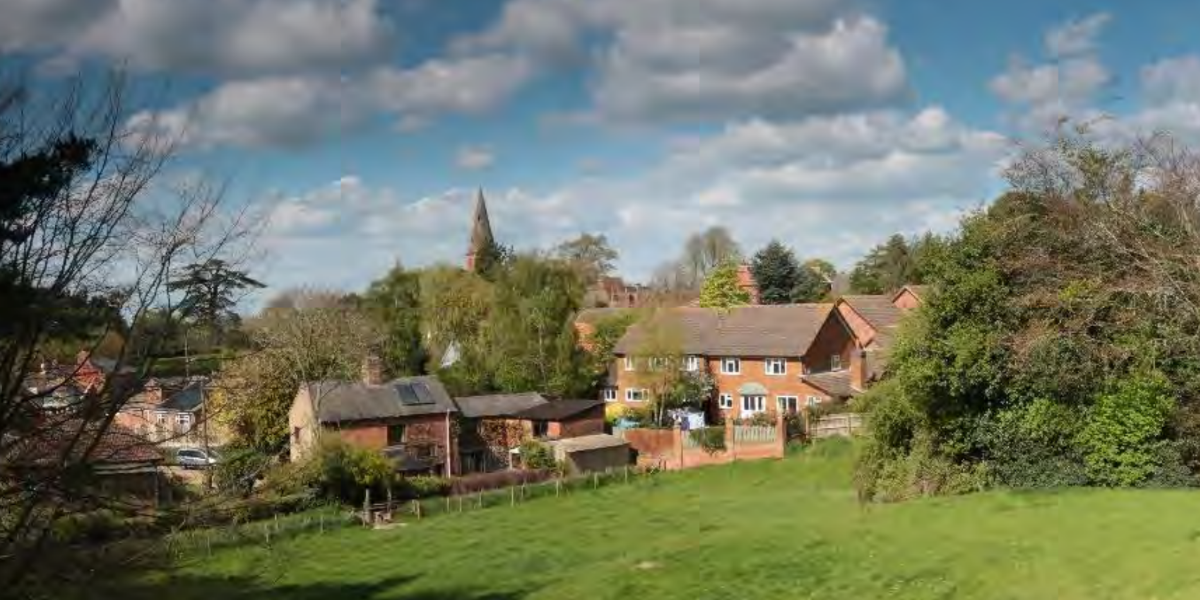
Crick sits just north of the Grand Union Canal and a stone’s throw from Junction 18 of the M1, yet the moment you turn off the A428 the roar of traffic fades and the village green opens like a scene from a country postcard. Honey-gold sandstone cottages, some thatched, edge the wide triangular common where pop-up markets and summer games break up the rhythm of everyday life. The sky feels big here: from Main Road you can watch red kites wheel over wheat fields that sweep toward the low Warwickshire hills, while in the other direction container trains slip past the vast sheds of DIRFT—proof that modern logistics and rural England can, improbably, share the same horizon.
History echoes along every lane. Crick’s name is thought to come from the Brittonic for “hill”, and the Norman tower of St Margaret of Antioch still anchors the skyline, its medieval bells ringing out across the rooftops. Canal fever arrived in the late 1790s when navvies drove a mile-long tunnel under Crack’s Hill; today boat horns and the thrum of diesel engines are part of the village soundtrack, especially during the late-May Crick Boat Show, when colourful narrowboats pack the marina, live music drifts over the towpath and every pub garden in town hums with conversation.
Speaking of pubs, The Wheatsheaf on Main Road has become Crick’s living room: flagstone floors, log fires, cask ales from local microbreweries and a menu that hops from pork belly to plant-based feasts. A short stroll away The Red Lion mixes Sunday roasts with quiz-night banter, while the members-run Crick Social Club pours budget-friendly pints beside a boules piste adults actually use. Morning coffee and picnic provisions come from the cheerful Co-op, though walkers often linger outside the Post Office, plotting routes along the Jurassic Way or canal towpath toward Yelvertoft and Watford Locks.
Nature is never far off. Follow Yelvertoft Road past mellow stone farmhouses and you reach Jubilee Wood, a 25-acre community woodland planted for the Queen’s Golden Jubilee and now laced with permissive paths, bluebells in spring and sloes come autumn. For a loftier panorama, climb Crack’s Hill: the grassy mound rewards with 360-degree views—canal in the foreground, church spire at eye level, and on clear days the Malvern-like silhouette of the Cotswolds on the farthest edge of sight.
Crick’s charm lies in these contrasts: mediaeval church and modern freight hub, towpath tranquility and bank-holiday bustle, locals swapping gossip over ale while cyclists clip past on long-distance routes. Stay for dusk and you’ll see narrowboats glow with fairy lights on mirror-still water, hear the last church bell fade, and feel the village settle into the kind of quiet that only countryside stitched with history can provide.