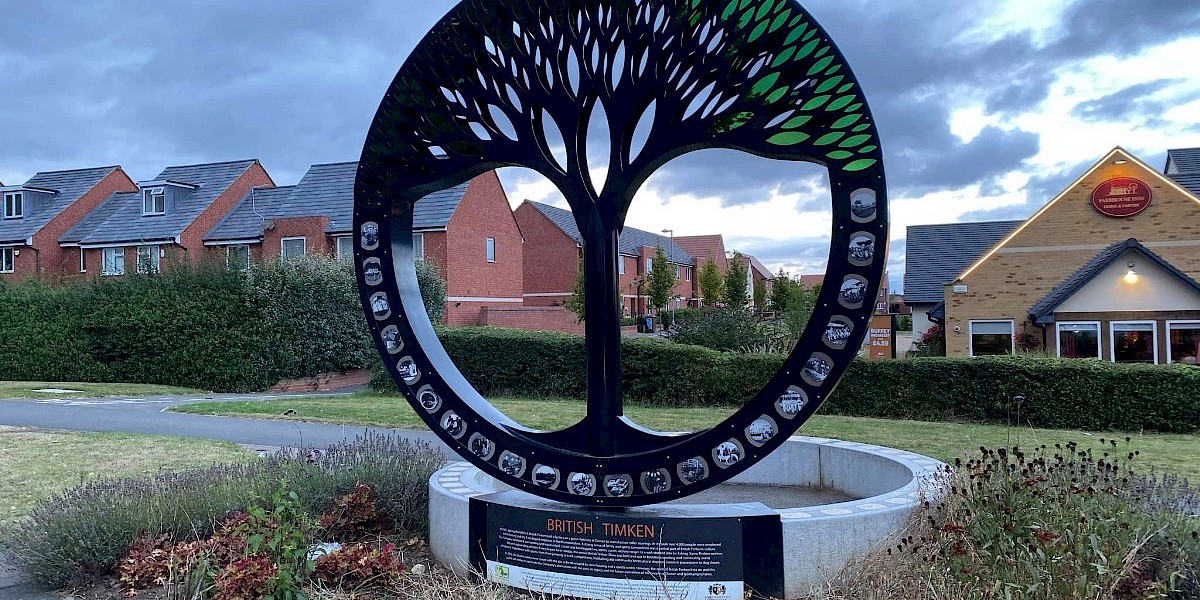
Duston, lying to the west of Northampton, is a large and historic parish that has evolved from an ancient rural settlement into a thriving suburban community. Its name is thought to derive from Old English, possibly meaning “hill of the stronghold” or “hill farm,” hinting at its early significance. Once a distinct village surrounded by open farmland, Duston has gradually merged with the expanding town, though its historic core still retains a sense of identity. The elevated position offers views across the Nene Valley, and the surrounding landscape has long been shaped by agriculture, quarrying, and, in later years, residential development.
The area has deep historical roots, with evidence of occupation stretching back to Roman times. In the medieval period, Duston was noted for its quarries, producing limestone used in many prominent Northamptonshire buildings. The parish church of St Luke, with its distinctive Norman doorway and later medieval additions, stands as a reminder of the village’s enduring presence through centuries of change. Old cottages and farmhouses still survive among the more modern housing, offering glimpses into its rural past.
In the 19th century, Duston experienced a boom with the expansion of ironstone quarrying and the arrival of new industry, bringing a period of prosperity and growth. Many Victorian and Edwardian houses from this era still line the village streets, while former industrial sites have been transformed into green spaces and residential areas. The proximity to Northampton meant that by the mid-20th century Duston had effectively become part of the town, yet community pride has kept alive the sense of a place with its own story.
Modern Duston is well-served with amenities, including local shops, cafés, schools, and parks, while nearby Harlestone Firs and the open countryside to the north provide easy escapes into nature. Its community centres and active local groups foster a strong sense of belonging, with events, fairs, and sports clubs bringing together residents of all ages.
Faith still plays a role in village life, with St Luke’s remaining a focal point alongside other places of worship, while the village’s pubs and social clubs continue the tradition of convivial meeting places. The balance between its ancient origins, industrial heritage, and suburban convenience makes Duston a place where history and modern life sit comfortably side by side, each enriching the other.