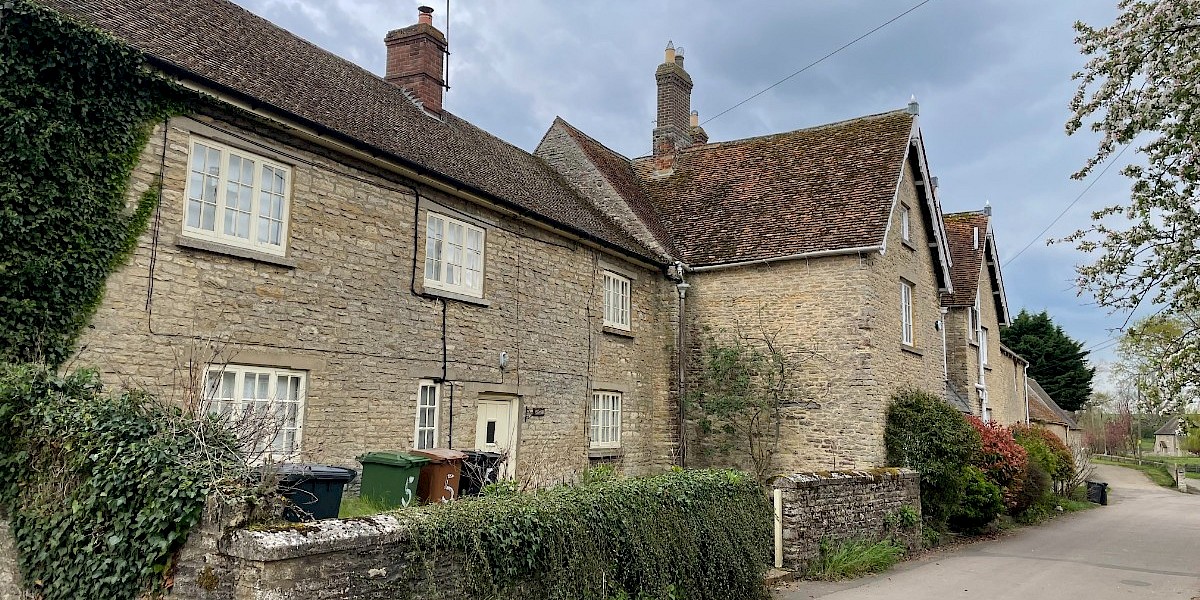
Set amid the gentle folds of the Northamptonshire countryside, Easton Maudit is a village that wears its history with quiet pride. Its name tells part of its story: “Easton” comes from Old English for “east farm” or “east settlement”, while “Maudit” recalls the Norman de Maudit family who were granted the manor after the Conquest. The Maudits were an influential lineage, and by attaching their name to the village they marked it out as their estate, a distinction that has endured for centuries. Surrounded by open farmland and hedgerow-lined lanes, the village offers far-reaching views that change with the seasons, from golden wheat fields in summer to frost-tipped pastures in winter.
At its heart stands the Church of St Peter and St Paul, a striking medieval building with a sturdy tower and intricate stonework. The church is rich in memorials and heraldic detail, a testament to the families who shaped the village’s fortunes. It is also closely linked with literary history, as the 17th-century rector was the father of poet John Dryden, who is believed to have spent time here. The peaceful churchyard, shaded by ancient yews, adds to the village’s atmosphere of timelessness.
Easton Maudit’s manor house, set within mature parkland, has long been at the centre of village life. In the 17th century it became the seat of Sir Christopher Yelverton, Speaker of the House of Commons, and later passed to the St John family. The estate’s history is interwoven with national events, and its owners were often figures of political and social influence. Though the manor is now privately owned, its presence still lends the village a sense of grandeur and continuity with its past.
Many of Easton Maudit’s houses are built in the warm local limestone, some with Collyweston slate roofs, lending the lanes a harmonious and quintessentially Northamptonshire character. While small in scale, the village feels well-kept and welcoming, with carefully tended gardens and cottages that seem to belong to a bygone age. The absence of busy through-roads adds to its tranquillity, making it a place where the pace of life is pleasantly unhurried.
The surrounding countryside offers opportunities for walking and cycling, with footpaths threading through farmland and connecting to neighbouring villages. Wildlife thrives here, with skylarks, hares, and deer often spotted in the fields. Community life, though low-key, is sustained by shared traditions and the close ties between residents, a quality that ensures Easton Maudit remains more than just a collection of historic buildings – it is a living, breathing village.