Gayton lies a little south-west of Northampton, set amid fields and hedgerows where the gentle undulations of the county begin to open towards the valley of the River Tove. It is a village with ancient roots, its name thought to mean “goat farm” or “enclosure for goats”, a reminder that this has long been a farming settlement shaped by livestock and arable land. From its higher points, there are far-reaching views across the surrounding countryside, giving the place a distinctive sense of openness.
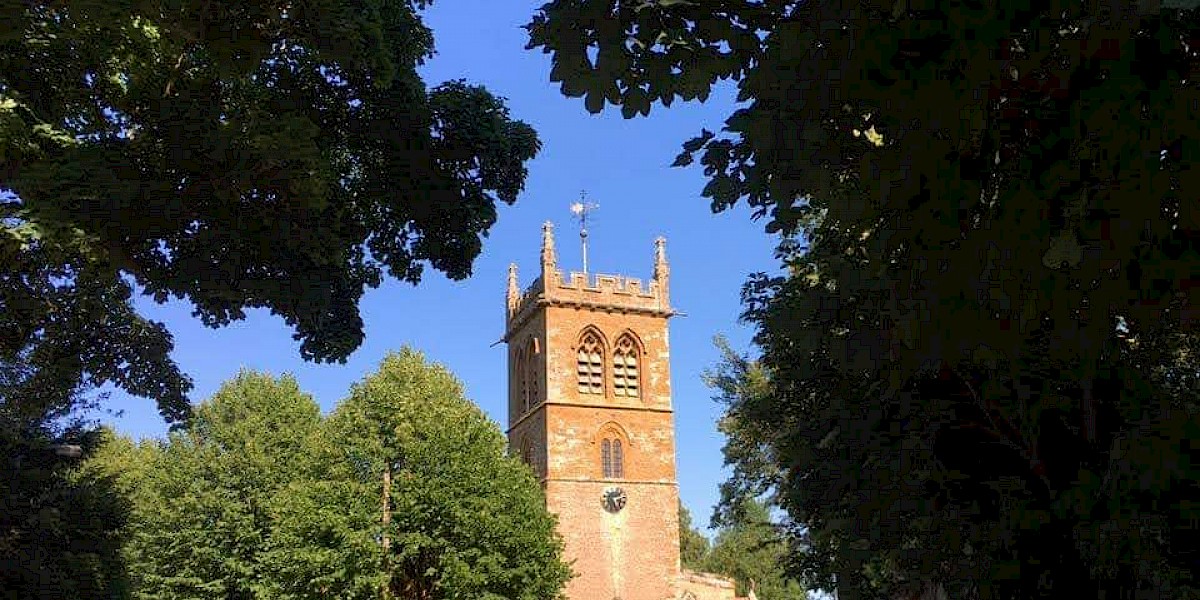
At the centre of the village stands the parish church of St Mary, a fine building of medieval origin with a tall spire that can be seen for miles around. The church bears witness to centuries of worship and local devotion, its fabric carrying traces of Norman and later work. Inside, visitors will find memorials to former residents and echoes of the community’s long history. Around it cluster older stone cottages and farmhouses, many built from the warm local ironstone that gives so many Northamptonshire villages their particular character.
Gayton also has a place in the story of the English Civil War. Royalist troops are said to have camped nearby, and the wider district was criss-crossed by armies during the conflict. Later centuries saw the coming of the Grand Junction Canal, which passes close to the village, and with it new opportunities for trade and transport. Today, canal towpaths provide a pleasant route for walkers, linking Gayton to a wider network of waterside paths and locks.
Village life retains its sense of neighbourliness, with community events and the local hall offering focal points for gatherings. Traditional pubs and nearby farm shops provide refreshment for both residents and visitors, while footpaths and bridleways radiating from the village make it a favoured starting point for country walks. The lanes remain relatively quiet, making Gayton feel like a place where time slows, yet it is within easy reach of Northampton and Towcester.
For those with an eye for architecture and heritage, the mix of medieval, Georgian and Victorian buildings adds visual interest at every turn. The church, cottages, and converted barns tell the story of a village that has adapted to changing times while holding onto its historic fabric. It is this blend of continuity and change, of rootedness and accessibility, that makes Gayton such an appealing corner of Northamptonshire.