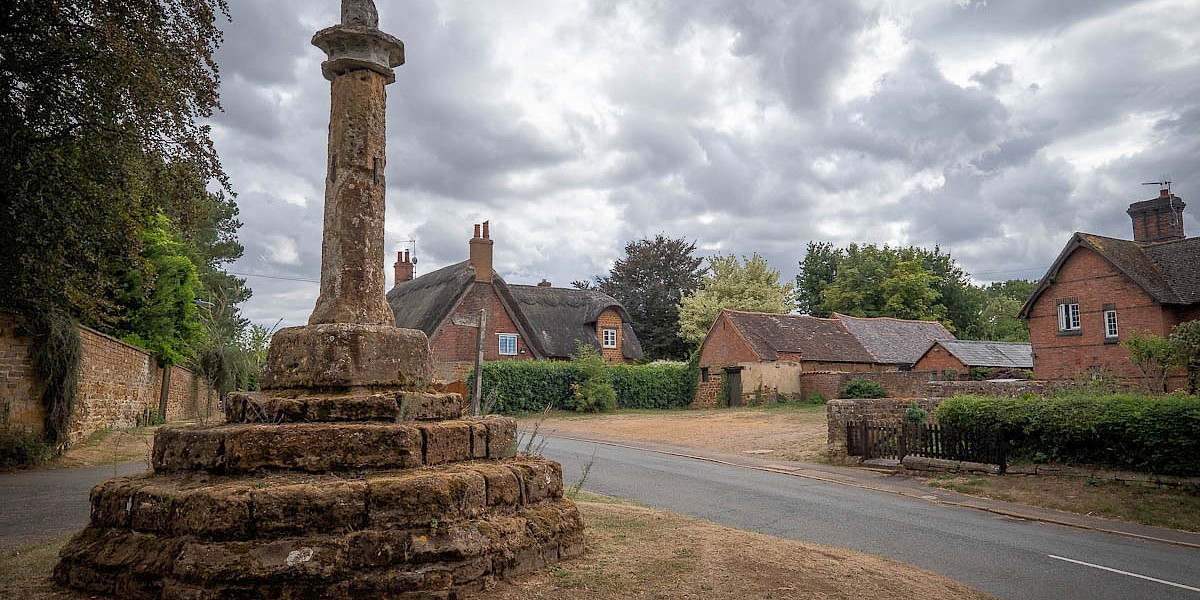
Great Brington is a village that captures much of what is quintessential about the Northamptonshire countryside. It sits on elevated ground with wide views across rolling farmland, the approach lined by hedgerows and ancient oaks. The village has long been shaped by its proximity to the Spencer estate at nearby Althorp, and traces of this connection are still evident in its architecture and community life.
At the heart of the village stands St Mary the Virgin, an impressive medieval church with strong links to the Spencer family. Within its walls are monuments to the family’s long history, including memorials carved in fine detail, making it a place of both local worship and national interest. The churchyard, shaded by yews, has become a point of quiet reflection for many who visit the area.
The village’s lanes are lined with houses built of the local sandstone, lending a warm and timeless feel. Thatched cottages mix with Georgian façades, each telling a small part of the village’s layered history. In centuries past, the settlement grew around farming, with its position on fertile land ensuring a steady rhythm of agricultural life, while more recent decades have seen a careful balancing of tradition with modern village living.
Community remains an important feature of Great Brington. The local pub and village hall provide spaces for social gatherings, and there is a strong sense of identity rooted in both the history of the parish and the ties to the neighbouring Althorp estate. Walkers and visitors often find themselves lingering, enjoying the quiet pace of life, the landscape of ridge and furrow fields, and the easy access to footpaths that cut through the surrounding countryside.
Great Brington manages to feel both historic and alive, a place where echoes of the past are interwoven with the warmth of a present-day rural community. Its story continues to be shaped by the people who live there, the heritage of the Spencer family, and the enduring character of this Northamptonshire village.