Set amid the gentle folds of the Northamptonshire countryside, Grendon sits peacefully between the market towns of Wellingborough and Northampton, surrounded by open farmland and threaded by quiet lanes. Its setting close to the valley of the River Nene has long shaped both its landscape and its character, with rich soils supporting agriculture for centuries. Today, the village retains a distinctly rural atmosphere, where wide skies, hedgerows and fields create a sense of space that feels both timeless and restorative.
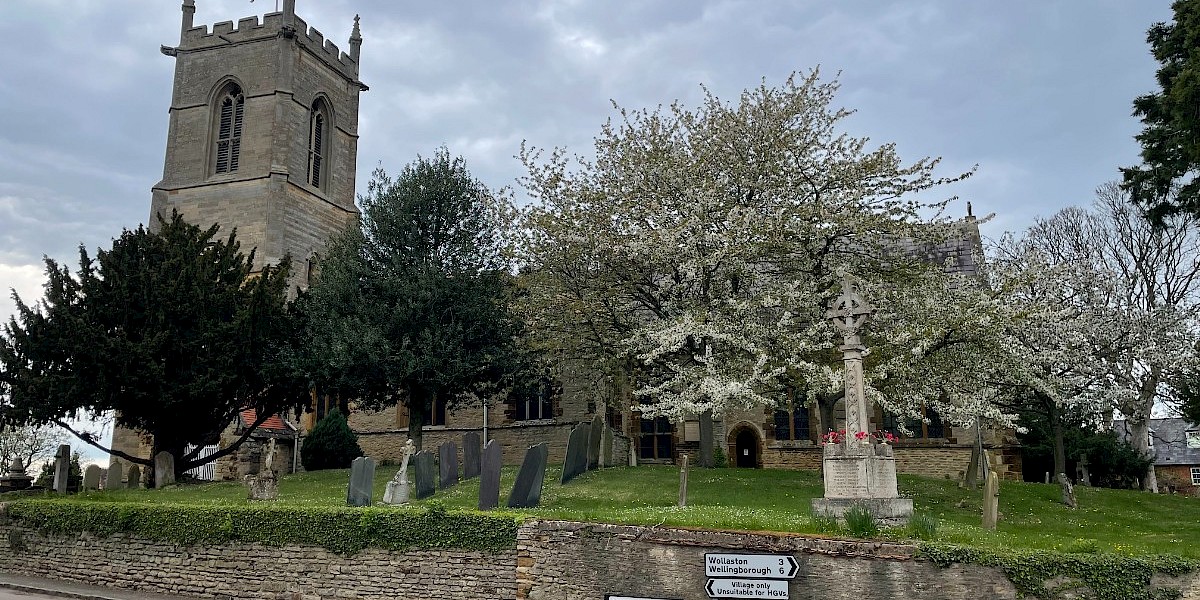
At the heart of Grendon stands the striking St Mary the Virgin Church, a building that anchors the village visually and historically. Much of the present structure dates from the 13th and 14th centuries, its tower rising confidently above ironstone cottages and later brick houses. Inside, medieval features sit alongside later additions, reflecting the layered story of the parish. The churchyard, shaded by mature trees, offers views across the surrounding countryside and serves as a quiet reminder of the generations who have shaped village life.
Grendon’s history reaches back to Saxon times, its name thought to derive from Old English, possibly meaning a green hill or valley settlement. The village appears in the Domesday Book, and through the medieval period it developed as an agricultural community, with ridge and furrow earthworks still visible in places around the parish. Farming remained central to local life for centuries, shaping both the pattern of fields and the rhythm of the year, from ploughing and harvest to livestock fairs and parish gatherings.
Just beyond the village core stands Grendon Hall, a grand country house set within parkland that speaks of later prosperity and changing rural fortunes. Although no longer a private residence in the traditional sense, the hall remains an imposing presence in the landscape and a reminder of the estate culture that once influenced much of Northamptonshire’s countryside. Nearby, Grendon Lakes has become a popular local attraction, with its lakeside walks, water-based activities and event spaces drawing visitors from across the county and adding a contemporary leisure dimension to the village’s rural setting.
Architecturally, the village presents an appealing mix of stone-built cottages, farmhouses and more recent homes that blend sympathetically into the older core. Warm Northamptonshire ironstone lends a mellow tone to many of the historic buildings, particularly around the church and along the older lanes. Community life remains active and welcoming, with parish activities, village events and access to surrounding footpaths ensuring that Grendon balances its historic roots with a vibrant, outward-looking spirit.