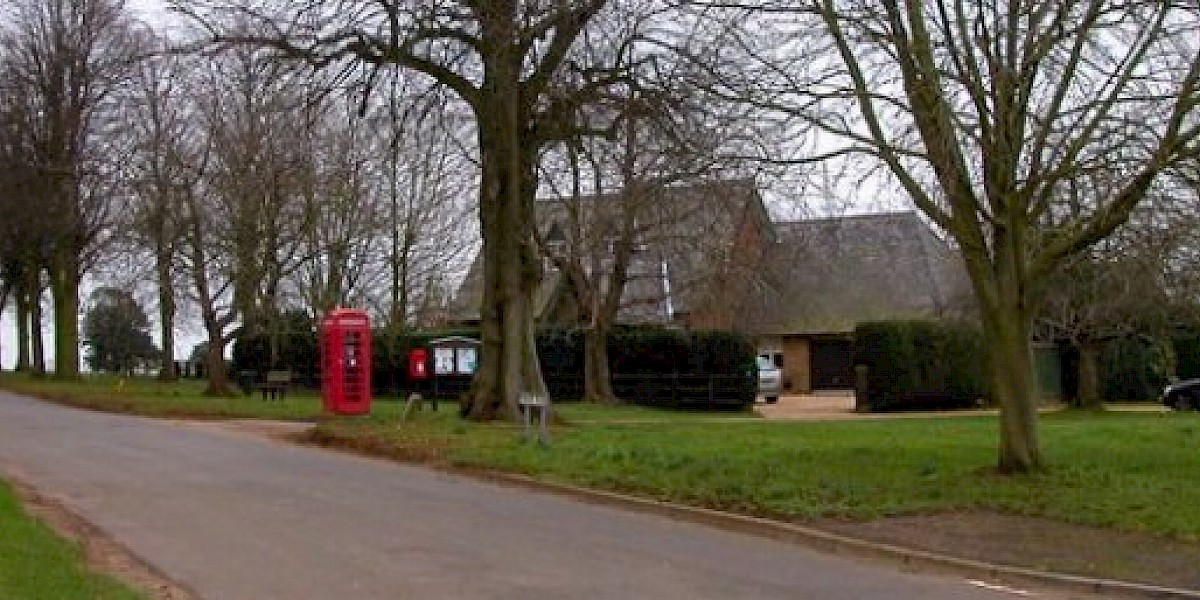
Set high on rolling ground in the north of Northamptonshire, Hanging Houghton enjoys expansive views across open farmland towards the valley of the River Nene. Its elevated position gives the settlement a sense of light and space, with big skies and gently undulating fields defining the landscape. Though distinctly rural in atmosphere, it lies only a few miles north-east of Northampton, making it both peaceful and conveniently placed.
The name reflects its topography. “Houghton” derives from Old English, meaning a farm or settlement on a hill, while “Hanging” suggests its situation on sloping ground, as though poised above the surrounding countryside. The village appears in the Domesday Book, confirming its long-established agricultural roots and continuity as a small farming community shaped by the rhythms of the land.
Unlike many Northamptonshire villages, Hanging Houghton has never had its own parish church. Instead, it has historically fallen within the ecclesiastical parish of nearby Holcot, with villagers attending services at St Mary the Virgin Church, Holcot. This shared parish arrangement reflects the settlement’s modest size and its long-standing connections with neighbouring communities.
Architecturally, Hanging Houghton is characterised by traditional stone cottages and farmhouses built from local ironstone and limestone, their mellow tones blending seamlessly with the surrounding fields. Narrow lanes wind between houses, and mature trees soften the edges of the settlement. Working farms on its fringes continue the agricultural tradition that has defined village life for centuries.
Today, Hanging Houghton retains a quiet, close-knit character. With footpaths leading out across open countryside and far-reaching views from its higher ground, it offers a tranquil base from which to explore this part of rural Northamptonshire. Its appeal lies not in grand landmarks but in its understated charm, historic continuity and the enduring beauty of its hilltop setting.