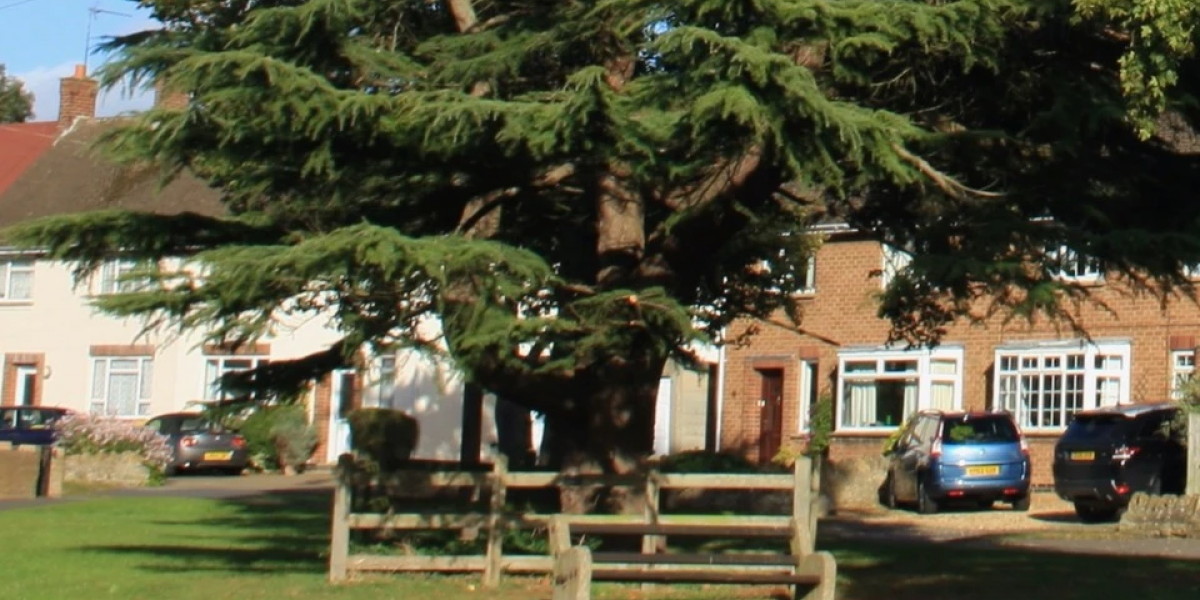
Harpole lies just west of Northampton, close enough to the town for convenience yet still retaining the character of a long-established Northamptonshire village. The settlement stretches mainly along the High Street and its connecting lanes, with open farmland surrounding the parish and shaping its rural setting. In recent decades the western expansion of Northampton has brought new development closer to the village, but Harpole itself maintains a distinct identity and a strong sense of place.
The village has very early origins and was recorded in the Domesday Book of 1086. Archaeological discoveries in the surrounding landscape reveal evidence of much earlier activity, particularly from the Roman period. North of the village lies the site of a Roman villa at Road Hill Farm, suggesting a prosperous rural settlement in the area nearly two thousand years ago. Harpole also gained national attention in 2022 when archaeologists uncovered a richly furnished early medieval bed burial dating from the seventh century, believed to be one of the most significant female burials of its type discovered in Britain. The village name is thought to derive from Old English, possibly referring to a grey or boundary pool.
The Church of All Saints stands within the village and remains the parish church, its ironstone construction reflecting the traditional building materials of the area. While medieval in origin, the building has been altered and restored over the centuries and continues to serve as a focal point for parish worship. Harpole also has a broader Christian presence, with other congregations meeting in the village, reflecting the diversity of faith life that has developed alongside the established parish tradition.
Architecturally, Harpole presents a mixture of older stone cottages, later brick houses and farm buildings that reflect its development as a working rural community. The pattern of buildings along the High Street and surrounding lanes shows how the village gradually expanded over time. Agriculture shaped village life for centuries, though like many places in Northamptonshire, Harpole also had connections to trades such as shoemaking during the nineteenth century.
Community life remains lively today. Harpole Primary School is an important centre for village families, while the Old School Hall—adapted from the former Victorian school building after the school moved in the 1970s—continues to host local activities and gatherings. Recreational facilities including playing fields and sports clubs provide further opportunities for residents to come together.
Harpole today combines accessibility with a deep sense of history. Its setting on the western edge of Northampton places it close to the county town while still surrounded by countryside. For visitors exploring the villages around Northampton, Harpole offers an appealing blend of archaeological significance, long parish traditions and an active modern community.